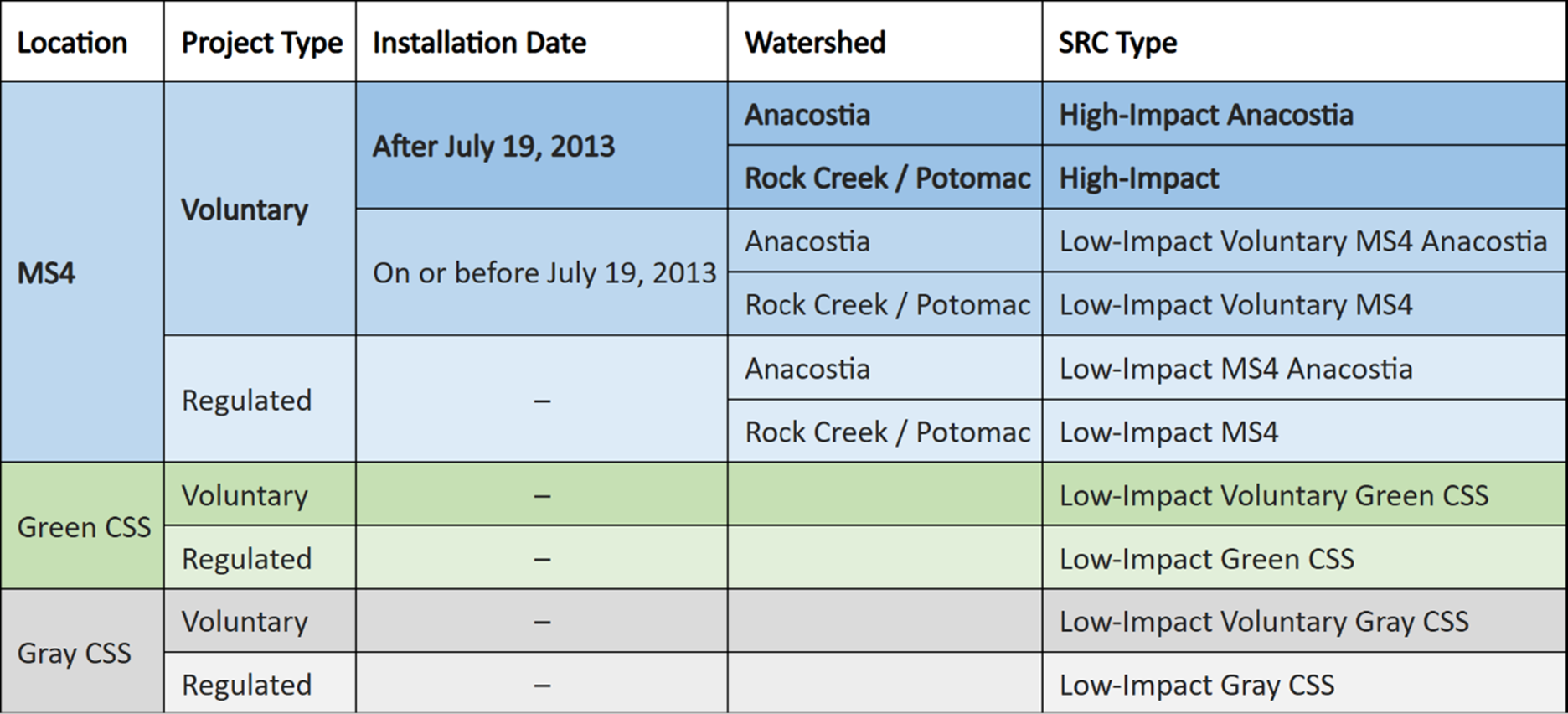

High-Impact Stormwater Retention Credits (SRCs) provide the best water quality outcomes for DC. They are generated by green infrastructure projects that meet all of these criteria:
Built in the MS4 area – the project drains exclusively to the Municipal Separate Storm Sewer System (MS4). Use this Map of MS4 and CSS areas to look up your project’s address.
Built after July 19, 2013 – the date the SRC program was established.
Voluntary – not built as part of a major regulated project that has a required Stormwater Retention Volume.
For all SRC types, DOEE must approve a Stormwater Management Plan and an application to certify the SRCs before they can be used.
Visit the SRC Registry to find High-Impact SRCs that are currently for sale.
Goals and Benefits
While green infrastructure is important everywhere in the District, it’s essential in the MS4 area where the projects that generate High-Impact SRCs capture stormwater runoff that would have drained untreated to our rivers and streams.
Installing green infrastructure, like rain gardens and green roofs, reduces stormwater runoff and helps prevent pollutants from entering the District’s rivers and streams. This is part of the approach to create a Sustainable DC and reach our goals to make the District’s rivers fishable and swimmable.
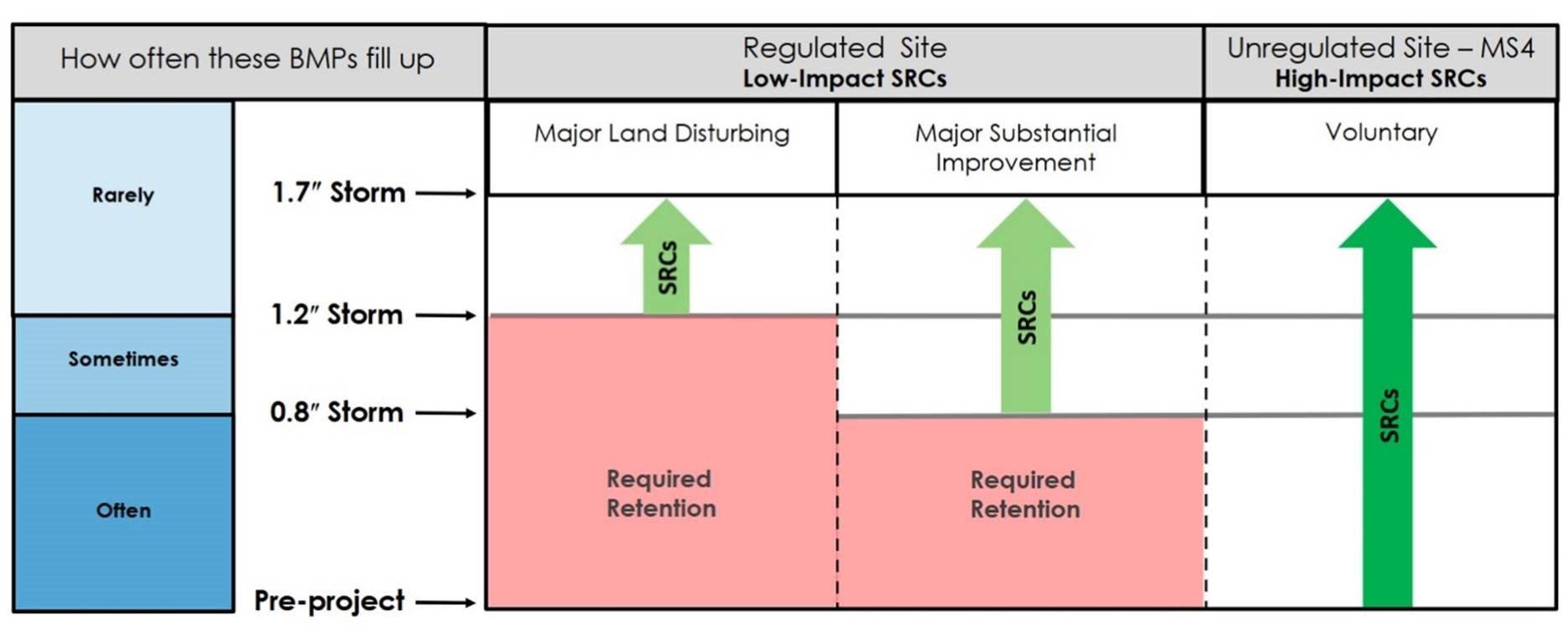
Comparing High-Impact and Low-Impact SRCs
Projects that generate High-Impact SRCs retain runoff from all small storms and fill up more of their capacity during every storm. Whereas Low‑Impact SRCs rarely provide additional retention, because they come from regulated projects that have a required Stormwater Retention Volume, so their extra capacity fills far less often.
Learn More
The SRC Price Lock Program supports projects that generate High-Impact SRCs.
All SRC Types – the table below provides a clear summary of how SRCs are categorized by project location, regulatory status, installation date, and watershed.